Regulations and certifications
New standards and constraints for carbon neutrality from the european and international level.
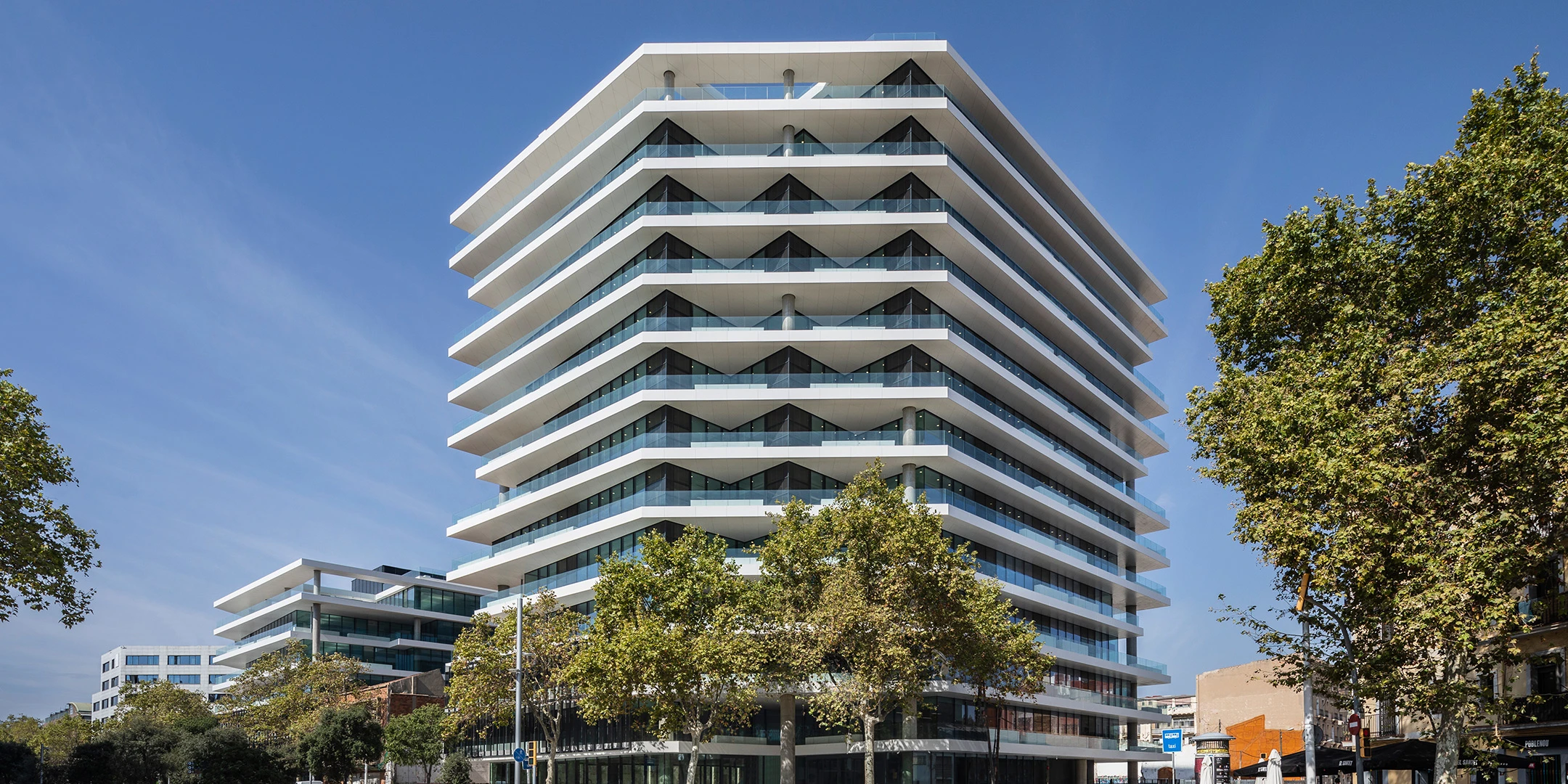
- Certified material
- Certified product
- Certified process
Aluminium Steward Initiative (ASI)
The entire certified aluminium value chain of WICONA.
ASI is a multi-stakeholder, non-profit, standards-setting and certification organization. It brings together producers, users and stakeholders, each with a commitment to maximizing the contribution of aluminium toward a sustainable society.
The Aluminium Stewardship Initiative is therefore a true sustainability certification: it addresses the environmental, social and governance (ESG) aspects of the entire aluminium value chain. Its standards address the concerns around the sustainable production of aluminium, from bauxite or mining to the production of semi-fabricated products, taking into account the recycling of pre- and post-consumer scrap.
We can offer certification through Hydro Extruded Solutions for activities including ingot casting, rolling of aluminium coils and strips, extrusion, fabrication and surface finishing of aluminium profiles, and manufacture of aluminium tubes.
Environmental Product Declaration
To have more transparency in the building industry, the Environmental Product Declaration (EPD) is a crucial tool. An EPD is a third-party verified and internationally recognised report that provides comprehensive, transparent and trustworthy information on the environmental impact of a product throughout its life cycle. Useful for many different applications, including public procurement and green building rating schemes, like BREEAM, LEED and DGNB.
WICONA enables you to accurately assess the environmental impact of your project – from individual systems to entire buildings. Our dynamic, product-specific EPDs are based on real material data and close collaboration across our supply chain. This ensures precise and transparent sustainability assessments that give your project a clear competitive advantage.
Cradle-to-Cradle
C2C is a leading multi-attribute, multi-industry science-based standard for verifying products for the circular economy with integration of beneficial Environment, Social and Governance features. The aim of the certification is to improve the quality of products and their related processes so that they have a better and positive impact on environment, users and people.
Sustainability has always played a key role at WICONA. At the beginning of 2017, WICONA system solutions were awarded the Bronze Cradle to Cradle (C2C) Certificate. Since then, WICONA has continually worked to further improve the production standards to achieve the next level. That has now been achieved.
Passive house certificate
Limits annual heating demand to 15 kW/h per m² of living area, so that a building can be heated exclusively by passive energy sources and needs no active heating system. To this end, the Passive House Institute requires a Uw value of ≤ 0.8 W/(m²K) for windows and glass façades.
LEED
Minergie standard
DGNB seal of quality
Sustainability – signed and sealed: our aluminium profile constructions meet the highest standards of leading green building certifications. With decades of experience and innovation, WICONA offers a broad portfolio of solutions to help you design more sustainable, future-oriented buildings.

EU-Taxonomy
The EU taxonomy is a uniform classification system that shows which economic activities are considered environmentally sustainable. It serves as a key tool for investors, companies and policymakers to promote green investments and support the transition to a more sustainable economy.
By providing relevant evidence, we provide support in the key points where the construction industry can influence:
Energy efficiency and emission reduction: Reduction of CO2 emissions during construction and operation in both new buildings and renovations.
Sustainable materials: The use of environmentally friendly building materials is encouraged to minimise the environmental impact of construction projects.
Circular economy: Transition to a circular economy by extending the life of buildings, using EoL materials and recycling building materials
Transparency and reporting: Transparency across the supply chain, construction companies must prepare detailed reports on their sustainable practices and their compliance with the taxonomy.