Ärzte ohne Grenzen
New space for emergency Aid: New “Médecins Sans Frontières” headquarters featuring a sustainable WICONA façade
- ArquitectoSauerbruch Hutton, Fabio Fossati Architecte
- Año2022
- FotógrafoJan Bitter
- FabricanteHevron SA
- CiudadGeneva
- PaísSwitzerland
New space for emergency Aid: New “Médecins Sans Frontières” headquarters featuring a sustainable WICONA façade
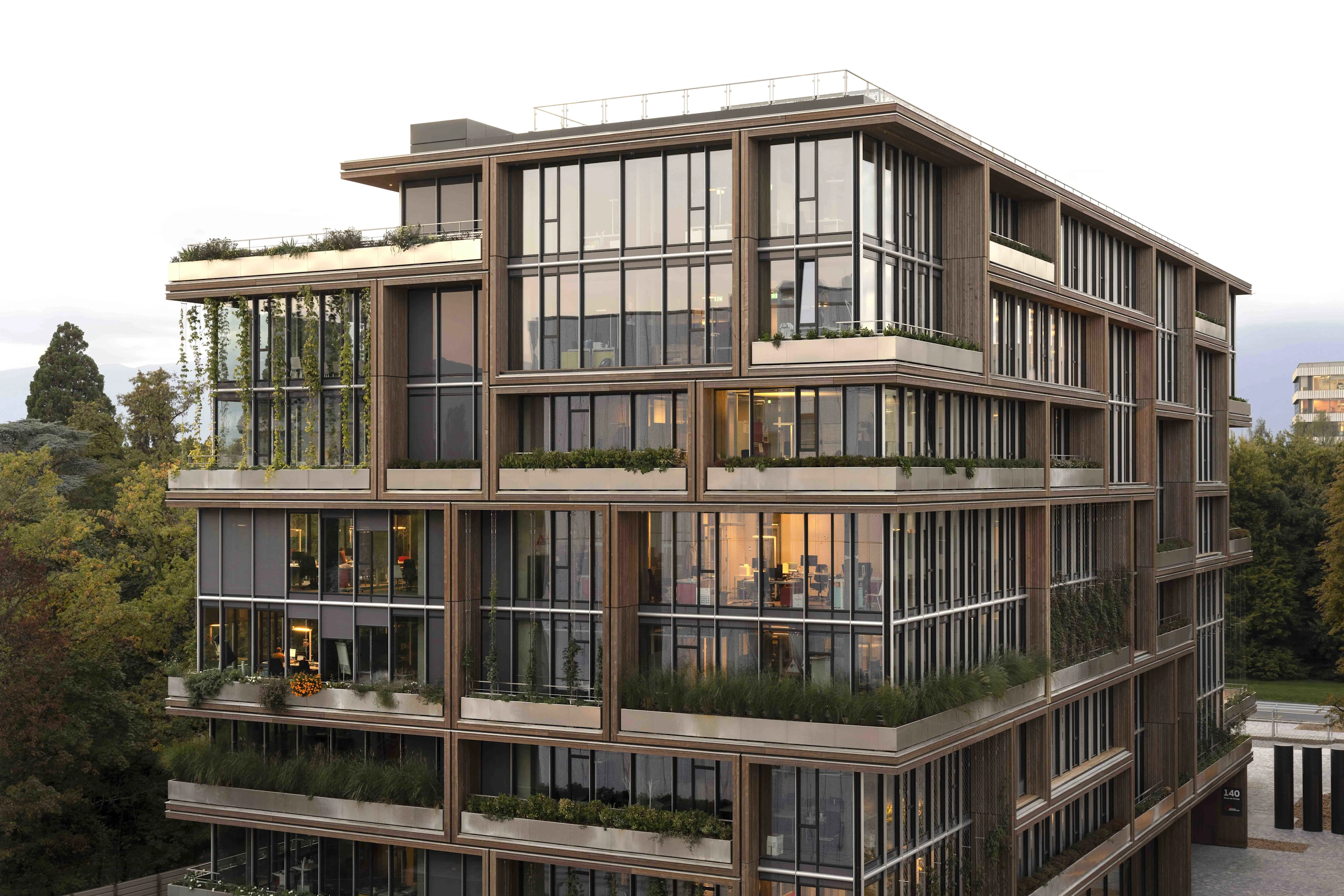
In Geneva, the new headquarters of Médecins Sans Frontières (MSF) – also known as “Doctors Without Borders” – has been completed. Designed by the renowned architectural firm Sauerbruch Hutton, the new building combines functional architecture and a flexible usage concept with a strong commitment to sustainability. WICONA systems made from the low-carbon aluminium alloy Hydro CIRCAL were used for the building envelope.
Emergency medical aid worldwide
As an international humanitarian organisation, Médecins Sans Frontières provides medical emergency relief in conflict zones, after natural disasters, and during epidemics – particularly for people threatened by illness or death. To optimise the workflows of this continually expanding organisation, and especially to enhance operational collaboration between its various units and specialised field teams, the decision was made to construct a new headquarters in the “Quartier des Nations” – located near Geneva Airport and close to numerous consulates and UN institutions.
Flexible design for flexible work
The architectural concept of the building reflects the flexibility essential to MSF’s operations and the coordination of constantly changing teams. Maximum transparency and a varied spatial layout characterise the new building, with numerous workspaces of different sizes, as well as conference rooms and communication zones on every floor. The building also features a spacious rooftop terrace, a restaurant, and a ground-floor foyer with auditorium.
Sustainability as a central planning principle
Sustainability was a key design goal for Sauerbruch Hutton and their Geneva-based partner Fabio Fossati Architectes. Green façades contribute to shading – and thus energy savings – while also improving air quality. Photovoltaic systems on the roof and a connection to the Geneva lake's district heating and cooling network round off the energy concept. The building envelope, designed according to the Swiss Minergie-P standard, also plays a vital role in ensuring energy efficiency and sustainability.
Aluminium façade with a minimal carbon footprint
The volumetric, greened, and puzzle-like façade – made of large-format timber frames with balconies and loggias – reflects the flexible internal structures and makes them visible from the outside. This timber construction is combined with project-specific WICONA aluminium windows of the WICLINE 75 evo series. With a depth of just 75 mm, this system meets the highest standards of thermal insulation and, in combination with external sun protection, contributes significantly to the building’s outstanding energy performance. The windows were manufactured using Hydro CIRCAL 75R. This sustainable aluminium alloy contains at least 75% recycled end-of-life aluminium – scrap that has previously been used in other products. The production of this high-quality secondary material requires only 5% of the energy needed to produce primary aluminium – significantly reducing the carbon footprint.
With the completion of this sustainable new building, the teams of Médecins Sans Frontières Switzerland, the international coordination office (MSF International), and the Access Campaign (CAME) are now all housed under one roof – and staff are already benefiting from improved and more sustainable workflows.
WICONA systems used
Windows WICLINE 75 evo
¿Quieres saber más?
Ponte en contacto con nosotros
¿Buscas asesoramiento profesional? ¿Tienes alguna sugerencia que te gustaría compartir con nosotros? Ponte en contacto con un experto haciendo clic en el siguiente enlace.
Contacta con nosotros